Sunday, February 6, 2011
NTS:: Aureal brand Infrared remote
Here's where to get the instructions for the patch to get this "Computer Remoter Control" "P-01RN" working.


Saturday, February 5, 2011
NTS:: XBMC + MP3 playback
This took some checking to find, and it's kinda counter-intuitive... do not, not ever, use Crossfade in XBMC if you want MP3 playback to work with a guri el-cheapo spdif soundcard to work under XBMC.
Under Crunchbang 9.01, avoid PulseAudio, ALSA works just fine, thanks very much - here's my asound.conf if you're in the same boat as I was:
Under Crunchbang 9.01, avoid PulseAudio, ALSA works just fine, thanks very much - here's my asound.conf if you're in the same boat as I was:
pcm.dmixer {
type dmix
ipc_key 1024
ipc_key_add_uid false
ipc_perm 0660
slave {
pcm "hw:0,1"
rate 48000
channels 2
format S32_LE
period_time 0
period_size 1024
buffer_time 0
buffer_size 4096
}
}
pcm.!default {
type plug
slave.pcm "dmixer"
}
Thursday, November 11, 2010
NTS:: #! setup
CrunchBang is my favourite Linux distro, and I have it running on my fileserver, which is running on a paltry 256Mb of RAM.
I discovered after poking around how to shutdown OpenBox properly, without the whole sudo shutdown problem (I found it would hang, and power-off). This script allows me to power-off once downloads are complete, using auto-shutdown, together with DownThemAll.
#/bin/bash
#
let wait_time=$1*60
echo "will shutdown in $1 minutes"
sleep $wait_time
gdm-control --shutdown && openbox --exit
exit 0
One of the things I've got going nicely is DropBox, which normally works well under Nautilus, so not really so good on OpenBox. DropBox works well following the instructions on the OpenBox wiki.
I discovered after poking around how to shutdown OpenBox properly, without the whole sudo shutdown problem (I found it would hang, and power-off). This script allows me to power-off once downloads are complete, using auto-shutdown, together with DownThemAll.
#/bin/bash
#
let wait_time=$1*60
echo "will shutdown in $1 minutes"
sleep $wait_time
gdm-control --shutdown && openbox --exit
exit 0
One of the things I've got going nicely is DropBox, which normally works well under Nautilus, so not really so good on OpenBox. DropBox works well following the instructions on the OpenBox wiki.
Friday, June 4, 2010
NTS: SMP8635
There seems to be plenty of software out there to build a firmware - there's various places to look, but I think there's a complete picture between them:
http://b-rad.cc/wdlxtv/
http://support.wdc.com/product/download.asp?groupid=1001&sid=112&lang=en
http://www.networkedmediatank.com/download/firmware/nmt/gpl/gpl.htm
http://wiki.opentvix.com/Sigma_Tools
http://www.wdtvc.com/downloads/
http://download.opentvix.com/
I've asked MagicTV NZ (aka HookTech), and they're in contact with Hong Kong, and hopefully trying to get the code from PixelMagic. It would be nice if there were media player abilities on this box:
 ... but I'm worried I'll brick the box in the process (and fall out of favour in the process!).
http://b-rad.cc/wdlxtv/
http://support.wdc.com/product/download.asp?groupid=1001&sid=112&lang=en
http://www.networkedmediatank.com/download/firmware/nmt/gpl/gpl.htm
http://wiki.opentvix.com/Sigma_Tools
http://www.wdtvc.com/downloads/
http://download.opentvix.com/
I've asked MagicTV NZ (aka HookTech), and they're in contact with Hong Kong, and hopefully trying to get the code from PixelMagic. It would be nice if there were media player abilities on this box:
 ... but I'm worried I'll brick the box in the process (and fall out of favour in the process!).
Monday, March 29, 2010
Slippery slope for linked data
I've been wondering for a while how to create a platform that used linked data natively.
There are plenty of platform building options which understand ordinary relational databases, but, for my requirements, there's nothing like Yii with a linked-data backend.
Anyway, I'd really like to see an OpenURL resolver re-use the data by making the requests it's given available as linked open data, in much the same way as SFX exposes it's data for other purposes, such as the bX service.
I also hope I can see a time when publishers, or a body representing them (CrossRef)will make the metadata for the articles they produce freely available, like Nature Publishing... hell, a lot of them expose their content to Google, so why not maximise their exposure via other means?
There are plenty of platform building options which understand ordinary relational databases, but, for my requirements, there's nothing like Yii with a linked-data backend.
Anyway, I'd really like to see an OpenURL resolver re-use the data by making the requests it's given available as linked open data, in much the same way as SFX exposes it's data for other purposes, such as the bX service.
I also hope I can see a time when publishers, or a body representing them (CrossRef)will make the metadata for the articles they produce freely available, like Nature Publishing... hell, a lot of them expose their content to Google, so why not maximise their exposure via other means?
Friday, October 16, 2009
CrossRef Labs - worth a look!
If you work in the "information space", then it's nice to know that CrossRef have some developmental services, but there's one, (okay, two), in particular that I really like the look of:
- Metadata Search complete with an OpenSearch plugin. This is not, of course a complete "search": "Instead, CrossRef Metadata Search is focused on allowing researchers to lookup citations using only terms that might appear in the bibliographic metadata of the item they are searching for."
- an undocumented aspect which I discovered which is a more RESTful service providing the metadata for a given DOI. This is of the form: http://api.labs.crossref.org/{DOI}.xml
Sunday, September 27, 2009
txtckr stage 1
Well, I've just committed a batch of updates to txtckr, which has finally moved beyond a mix of php & pseudo-php to a stage where I run it on a laptop without any errors (with the included very simple test).
It's almost at the stage of adding the finishing touches to the name handling, where the various openurl name parts get humpty-dumptied again. It's just skeleton coding at this stage, but hopefully a pretty sound basis for what's to come!
It's almost at the stage of adding the finishing touches to the name handling, where the various openurl name parts get humpty-dumptied again. It's just skeleton coding at this stage, but hopefully a pretty sound basis for what's to come!
Thursday, September 17, 2009
Google Co-op: EBSCO Connect search
There's been a bit of talk about EBSCO Connect content appearing on Google, and while it's not the sort of thing that thrills me necessarily, I found it was easy enough to create yet another Google Custom search, which would allow the retrieval of EBSCO connect material only.
There appears to be quite a bit of content there - give the search a go, and leave a response if you feel that way inclined...
There appears to be quite a bit of content there - give the search a go, and leave a response if you feel that way inclined...
Thursday, August 6, 2009
Dealing with humans' (names)
Recently I hit a slight snag on a fairly common problem... dealing with names. This is a problematic area, given that everyone has one, and trying to build in what we know about names into software is actually a bit of a slog!
What I'm doing is trying to parse names, (mainly author names), for txtckr, so that one of the output display formats could be a reference, (APA, for example). To do this, I also need to untangle the "rft.au" information which is delivered through OpenURL, and I'm trying to build in some "forgiveness" to allow for people/companies that don't follow spec's properly!
Things to consider:
What I'm doing is trying to parse names, (mainly author names), for txtckr, so that one of the output display formats could be a reference, (APA, for example). To do this, I also need to untangle the "rft.au" information which is delivered through OpenURL, and I'm trying to build in some "forgiveness" to allow for people/companies that don't follow spec's properly!
Things to consider:
- with a full name, is it supplied first-name(s) last-name/surname, and if so, where does the surname begin? This is fine for a fair number of relatively simple names, but what about surnames which aren't, such as "van der Weerden"?
- if you're going to receive name fragments, how do you build these sensibly into software, so you can give permutations of the name, e.g. Pasley, Tom == Pasley, T. == Tom Pasley == T. Pasley?
Friday, July 17, 2009
What if OpenURL resolvers could blog?
I thought about this when I was thinking about having support for unAPI, etc. I found Mike Giarlo's plugin for WordPress, which added this, and I could make it work for txtckr, but why should I?
I may have overlooked something, (since I don't use WordPress), but:
There's also the tools available through something like the WordPress platform, which further promotes the re-distribution of information about articles, books, etc., including COinS, RSS feeds, OAI-PMH, unAPI, etc.
Of course there's also the ability for others to comment and refer, (trackback), on the item being represented in the blog post.
I may have overlooked something, (since I don't use WordPress), but:
- what if WordPress was the OpenURL resolver, (well, actually it wasn't but just looked like it)?
- what if txtckr could redirect to the WordPress post which had the request response once it had made a post which contained all of that info?
There's also the tools available through something like the WordPress platform, which further promotes the re-distribution of information about articles, books, etc., including COinS, RSS feeds, OAI-PMH, unAPI, etc.
Of course there's also the ability for others to comment and refer, (trackback), on the item being represented in the blog post.
Wednesday, July 15, 2009
txtckr under development
While I was working at Crop & Food Research, I developed an OpenURL resolver called textseeka.
txtckr is a GPL, (open-source), OOP focussed, replacement for textseeka, based on what I know now, in terms of programming, OpenURL, webservices and metadata sources.
This is not a simple overnight project, complicated by the fact that I need access to the original code-base, which is still at my old work. Over time, (snatched here and there), txtckr will be fleshed out, starting from the bones that are there now, (currently just a class for the "context object").
txtckr is a GPL, (open-source), OOP focussed, replacement for textseeka, based on what I know now, in terms of programming, OpenURL, webservices and metadata sources.
This is not a simple overnight project, complicated by the fact that I need access to the original code-base, which is still at my old work. Over time, (snatched here and there), txtckr will be fleshed out, starting from the bones that are there now, (currently just a class for the "context object").
Saturday, July 4, 2009
If you can't bet them, join 'em...
I've been at UCOL Library for a while now, which means I'm firmly part of the Ex Libris picture, as we have Voyager, which is quite a part of my job, as the Information systems Librarian.
As such, I've spent quite a bit of time putting lipstick on the pig... and one of the features I've implemented recently is an APA citation for each of the books in our catalogue, which is bottom-rightish. This picture might be a little fuzzy, (but you can't see it unless you're on-campus anyway...):

Initially, I thought this would be quite easy, since I thought we must have at least some OCLC-derived records in our catalogue. The APA citation service requires an OCLC number, and I learnt that there are not that many records which have OCLC numbers... but there are, of course, lots which have ISBNs.
The solution required writing some web scripts which:
Isn't this what LibX does? Maybe this is part of what is currently possible with their LibApps?
As such, I've spent quite a bit of time putting lipstick on the pig... and one of the features I've implemented recently is an APA citation for each of the books in our catalogue, which is bottom-rightish. This picture might be a little fuzzy, (but you can't see it unless you're on-campus anyway...):

Initially, I thought this would be quite easy, since I thought we must have at least some OCLC-derived records in our catalogue. The APA citation service requires an OCLC number, and I learnt that there are not that many records which have OCLC numbers... but there are, of course, lots which have ISBNs.
The solution required writing some web scripts which:
- do a lookup on the ISBN, and get the OCLC number
- use the OCLC number to get the APA citation
- generate JSON output so this is accessible to the browser
Isn't this what LibX does? Maybe this is part of what is currently possible with their LibApps?
Saturday, June 13, 2009
NTS:: When Sansa's go bad...
[Legal Warning: By following these instructions, you agree not to hold me liable for any bad sh*t that happens to your MP3 player.]

In case this happens again, here's how to un-brick a Sansa Express... in Windows XP, with access to the Administrative Tools (I'm not sure how to do the same in Linux - any ideas?).
I'm unsure how my son's Sansa Express was bricked, but a common cause fro "bricking" is the inability of the Sansa Updater to finish the complete process of updating the firmware. A complicating factor can be the lack of a newer version of the firmware... so you need to have a older version of the firmware on hand [thankfully chrisjs has a copy].
Okay, here's what to do:
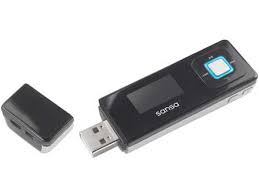
In case this happens again, here's how to un-brick a Sansa Express... in Windows XP, with access to the Administrative Tools (I'm not sure how to do the same in Linux - any ideas?).
I'm unsure how my son's Sansa Express was bricked, but a common cause fro "bricking" is the inability of the Sansa Updater to finish the complete process of updating the firmware. A complicating factor can be the lack of a newer version of the firmware... so you need to have a older version of the firmware on hand [thankfully chrisjs has a copy].
Okay, here's what to do:
- Unzip the files from the 7zip file, (see link above), into it's own directory.
- Hold the Volume Down - button on the Sansa Express while inserting it into a USB port on your computer, and hold for about 20 seconds.
- Release it, and hopefully in Windows Explorer you should see 2 Flash Drive symbols, but when you try to use them, they're empty, and you can't format them either (they're 0Mb in size :])
- DON'T PANIC!
- In my case, access to the Admin Tools is off the Control Panel - the one that I've used is Computer Management.
- Under Storage, click on Disk Management
- In the top right panel, locate your dud "Flash Drive"... it shouldn't indicate a file system, because that's what a bricked Sansa looks like...
- Right-mouse click on the Disk Drive icon in the left column of that same panel, and you should see the option to format your Sansa - (at this point I can't remember is I used FAT as the filesystem, or FAT32).
- Format the Sansa
- Then go back to the directory with the unzipped files, and use SansaExpressUpdater.exe
- You should find that the Sansa Updater will complete the update, and when the process is complete, the Sansa Express should be un-bricked.
Saturday, May 30, 2009

Thursday, May 21, 2009
Farewell PlantandFood.com, Hi UCOL
Well, I'm in my "break period" between jobs.
I start as the Information Systems Librarian at UCOL on Monday, so I might not be posting much for a little while, while I get my head around Voyager, etc.
I really enjoyed my time at Crop & Food Research, (which merged with HortResearch and became Plant and Food Research 1 December 2008), and then at Plant and Food Research. It was a really interesting place for me, as a librarian, to work: I felt appreciated by other staff, (particularly "the scientists"), I had great people to work with, and there was plenty to get my teeth into! There was also Magic for a while at lunchtimes, and though I seldom won, it was good fun.
So, thanks to all of the exCFR/PFR staff -those who were kind enough to put comments in my card, and for their farewells, and also for the lovely farewell gifts. I really enjoyed my time with you guys, and I hope to keep in touch!
The laptop bag I'm especially chuffed with, since it's also a backpack - great for those times when you're tired, and your laptop seems to weigh a ton! (- no, I don't have a 17" laptop, but I'm optimistic...).


I start as the Information Systems Librarian at UCOL on Monday, so I might not be posting much for a little while, while I get my head around Voyager, etc.
I really enjoyed my time at Crop & Food Research, (which merged with HortResearch and became Plant and Food Research 1 December 2008), and then at Plant and Food Research. It was a really interesting place for me, as a librarian, to work: I felt appreciated by other staff, (particularly "the scientists"), I had great people to work with, and there was plenty to get my teeth into! There was also Magic for a while at lunchtimes, and though I seldom won, it was good fun.
So, thanks to all of the exCFR/PFR staff -those who were kind enough to put comments in my card, and for their farewells, and also for the lovely farewell gifts. I really enjoyed my time with you guys, and I hope to keep in touch!
The laptop bag I'm especially chuffed with, since it's also a backpack - great for those times when you're tired, and your laptop seems to weigh a ton! (- no, I don't have a 17" laptop, but I'm optimistic...).


Saturday, May 16, 2009
Librarian-developed/enhanced resources
Okay, I've hinted at this in my last post... in this category would be anything that (any group)/Library/Librarian develops for/with it's clients/users - some examples:
- OpenURL resolver logged data (and no, I'm not meaning like Ex Libris bX). This is meshed-up data from a variety of web-services which your OpenURL resolver consumes to deliver the data and services which are displayed to Library clients/users as a result of their request.
- Librarian-developed interfaces - an example being something like a Z39.50 interface to an existing catalogue/dataset which presents the data in a different way... like a more user-friendly interface which shows individual results in more detail, with an OpenURL link to request them (as I demo'd at work to Ann Barrie from NLNZ - I'll post a screenshot if I get time).


- LinkedData - there's plenty of this stuff being done including on the dataincubator site (no, I'm not employed by Talis, and I'm not sure how many of the people in this group are actually "Librarians")
Wednesday, May 6, 2009
Picking fights with giants...
A while ago I picked a fight with Ex Libris, mainly about their EL Commons, mainly on two points (although I'd hoped they'd be moot points now):
What I didn't manage to convey in the last email I sent, (partly because I got bored with them not biting back, and never finished my very last email), was the fact that I thought Ex Libris was overlooking another important information resource - Librarian-developed/enhanced resources.
[more about this later...]
1) "I don't think it's appropriate for Ex Libris to promote "El Commons" as part of an "Open-Platform Strategy" though - I think you should promote it as a service to the "Ex Libris community". There's a big difference between the two, and I believe Ex Libris are mis-using the word "open" in this context."This was following on from an October 2008 post on a Talis blog [ http://blogs.talis.com/panlibus/archives/2008/10/come-on-in-its-open-with-your-ex-libris-key.php ], which ended on the note that:
2) I'd "expect that there would be a system where developers, would be able to at least view other developer contributions and either:
- submit details about resources for which they would like Ex Libris to provide adaptors
- provide plugin documentation to create suitable adaptors themselves (if they have "Documentation Center log in details")"
Well El Commons is up running and accessible at http://www.exlibrisgroup.org. Unfortunately as Oren hinted, you can only enter the commons with your Ex Libris Documentation Center or SupportWeb user name and password – a bit of a misuse of the generally understood idea behind a commons methinks.
What I didn't manage to convey in the last email I sent, (partly because I got bored with them not biting back, and never finished my very last email), was the fact that I thought Ex Libris was overlooking another important information resource - Librarian-developed/enhanced resources.
[more about this later...]
Sunday, May 3, 2009
NTS:: CrossRef alternatives
CrossRef provide a great service with their DOI/OpenURL resolver. There are times however, (esp. since their service was not designed to be a real-time service), goes down, or is unreachable from our network (at work).
Thankfully, you are able to cache the data, as Chuck Koscher recently commented - but what about alternative services?
PubMed is good for recent articles, and other services (such as Web of Science, etc.) are probably no better, unless they have also happen to be able to access the CrossRef OAI-PMH service. You can probably do this search with other NLM databases too.
Example PubMed search:
10.1002/jmv.21494 [aid]
The [aid] is, predictably, the "article identifiers submitted by journal publishers such as doi (digital object identifier). These data are typically used for generating LinkOut links." These include PIIs (Publisher's Item Identifiers), used by Elsevier (and some other publishers). This search can be used as part of a PHP script, such as Alf Eaton's.
On a related note, PMC ids are also appearing in PubMed XML - to link to PubMedCentral with:
PubMedCentral ID (PMCID): http://www.pubmedcentral.nih.gov/articlerender.fcgi?artid=239018
PubMed ID (PMID): http://www.pubmedcentral.nih.gov/articlerender.fcgi?tool=pubmed&pubmedid=2873788
Thankfully, you are able to cache the data, as Chuck Koscher recently commented - but what about alternative services?
PubMed is good for recent articles, and other services (such as Web of Science, etc.) are probably no better, unless they have also happen to be able to access the CrossRef OAI-PMH service. You can probably do this search with other NLM databases too.
Example PubMed search:
10.1002/jmv.21494 [aid]
The [aid] is, predictably, the "article identifiers submitted by journal publishers such as doi (digital object identifier). These data are typically used for generating LinkOut links." These include PIIs (Publisher's Item Identifiers), used by Elsevier (and some other publishers). This search can be used as part of a PHP script, such as Alf Eaton's.
On a related note, PMC ids are also appearing in PubMed XML - to link to PubMedCentral with:
PubMedCentral ID (PMCID): http://www.pubmedcentral.nih.gov/articlerender.fcgi?artid=239018
PubMed ID (PMID): http://www.pubmedcentral.nih.gov/articlerender.fcgi?tool=pubmed&pubmedid=2873788
Tuesday, April 28, 2009
Cowtrails and standards
Comparing these two, the first thing you'd notice is that cowtrails are easier to follow... while standards give a sound base.
If you have to implement a service which conforms to a standard though, you need to have something readable, and standards, while normally explicit, don't necessarily go into much detail about the philosophy or thought processes behind them. I suppose there's the expectation that, if you're reading this standard, you're already "there".
I'm not sure about anyone else, but I found, despite comments like "you don't want to know WTF we were thinking" that getting some idea of these thought processes was useful. Admittedly, my experience is limited, and I've heard various comments about the Z39.88-2004 being over-engineered... but once I saw some of the stuff by Jeff Young on his Q6 blog, OpenURL 1.0 made sense.
If you have to implement a service which conforms to a standard though, you need to have something readable, and standards, while normally explicit, don't necessarily go into much detail about the philosophy or thought processes behind them. I suppose there's the expectation that, if you're reading this standard, you're already "there".
I'm not sure about anyone else, but I found, despite comments like "you don't want to know WTF we were thinking" that getting some idea of these thought processes was useful. Admittedly, my experience is limited, and I've heard various comments about the Z39.88-2004 being over-engineered... but once I saw some of the stuff by Jeff Young on his Q6 blog, OpenURL 1.0 made sense.
Tuesday, April 21, 2009

Subscribe to:
Posts (Atom)